

Asset Management Guide
Track and manage all your assets in one secure place. Learn how to add properties, monitor portfolio health, and maintain accurate records for your will.
Last reviewed
Types of Assets You Can Track
Real Estate Properties
Add residential and commercial properties including primary homes, rental properties, holiday homes, and land.
Manage Properties →Financial Assets
Track investments, bank accounts, retirement funds, stocks, bonds, and other financial instruments.
Learn About Portfolio Health →Expected Inheritances
Document potential future inheritances to help with estate planning and ensure nothing is overlooked.
Add Expected Inheritance →Equity Compensation
Track stock options, RSUs, ESPP shares, and other equity-based compensation from your employer.
Equity Compensation Guide →Retirement Accounts
Track pensions, 401(k) plans, IRAs, SIPPs, and other retirement savings accounts from around the world.
Retirement Accounts Guide →Insurance Policies
Track life insurance, health insurance, disability coverage, and other insurance products that protect you and your family.
Insurance Policies Guide →Liabilities
Track mortgages, loans, credit cards, student debt, and other financial obligations that form part of your estate.
Liabilities Guide →Crypto Assets
Catalogue cryptocurrency wallets, exchange accounts, DeFi positions, and NFTs that form part of your estate.
Crypto Assets Guide →Digital Services
Track email accounts, social media, domain names, cloud storage, subscriptions, and other online services.
Digital Services Guide →Business Ownership
Record company shares, partnership interests, LLC memberships, and other business ownership stakes as part of your estate.
Business Ownership Guide →Business Liabilities
Track business loans, commercial mortgages, trade credit, and other business obligations alongside personal guarantees.
Business Liabilities Guide →Business Intellectual Property
Track patents, trademarks, copyrights, trade secrets, domain names, and other IP assets that form part of your business estate.
Business IP Guide →Business Digital Accounts
Track SaaS subscriptions, cloud services, code repositories, government portals, and payment processors tied to your business.
Business Digital Accounts Guide →Personal Possessions
Record valued belongings such as jewellery, art, furniture and vehicles, along with where they are kept.
Personal Possessions Guide →Precious Metals
Track gold, silver and other bullion holdings, including the form they are held in and where they are stored.
Manage Precious Metals →Business Financial Accounts
Track business bank accounts, merchant accounts and other company financial holdings separately from your personal finances.
Business Financial Accounts Guide →Other Assets
Track intellectual property, royalties, collectibles, memberships, legal claims, and other miscellaneous assets.
Other Assets Guide →Adding Property Assets
Properly documenting your real estate holdings ensures they are correctly distributed according to your wishes.
- Go to Asset Management → Personal Asset Tracker → Properties
- Click "Add New Property"
- Enter property details (address, type, ownership percentage)
- Add purchase information (date, price, current value)
- Specify ownership type (sole, joint tenancy, tenancy in common)
- Upload relevant documents (deeds, titles)
- Save the property to your portfolio
Ownership Types
Portfolio Health Score
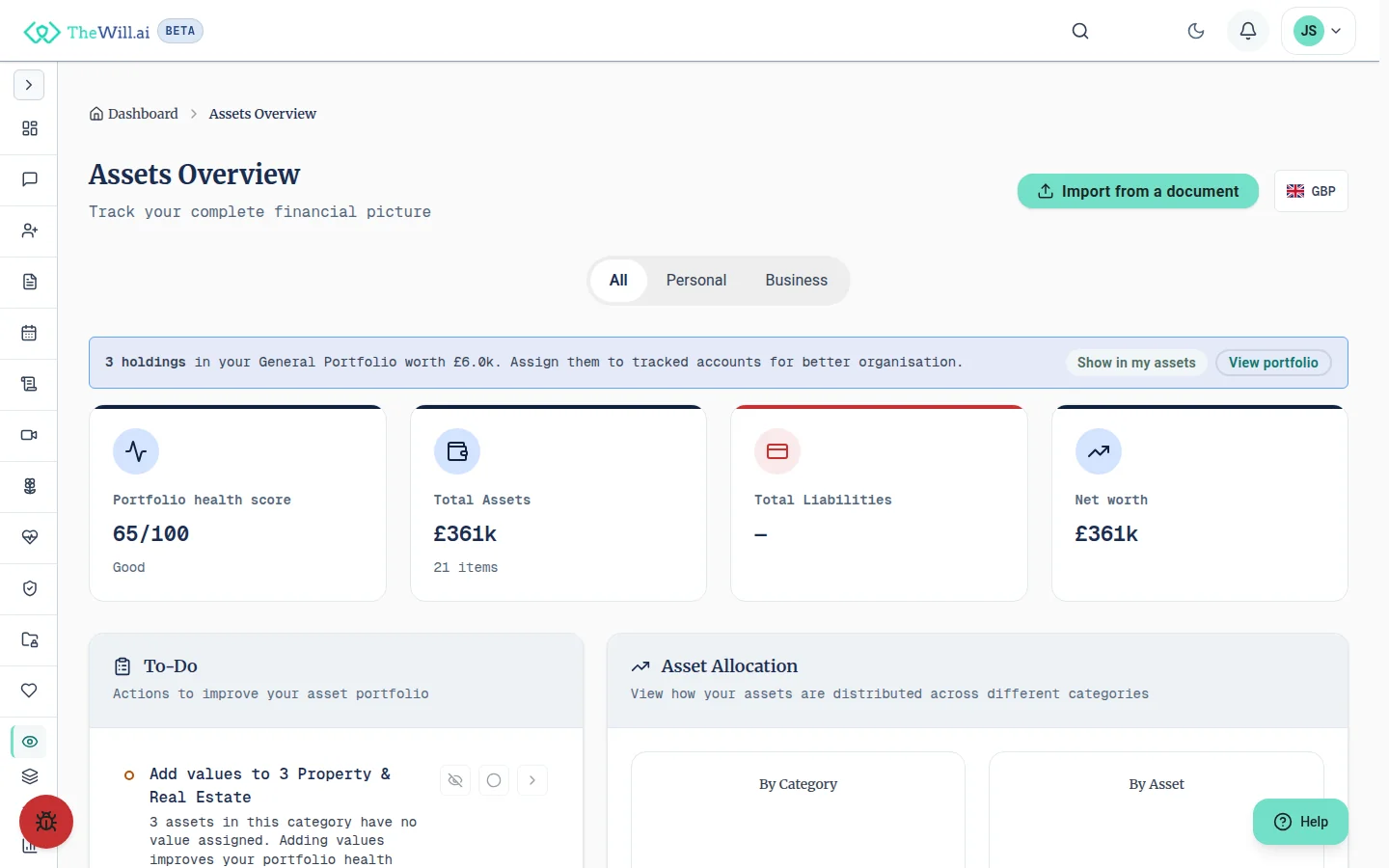
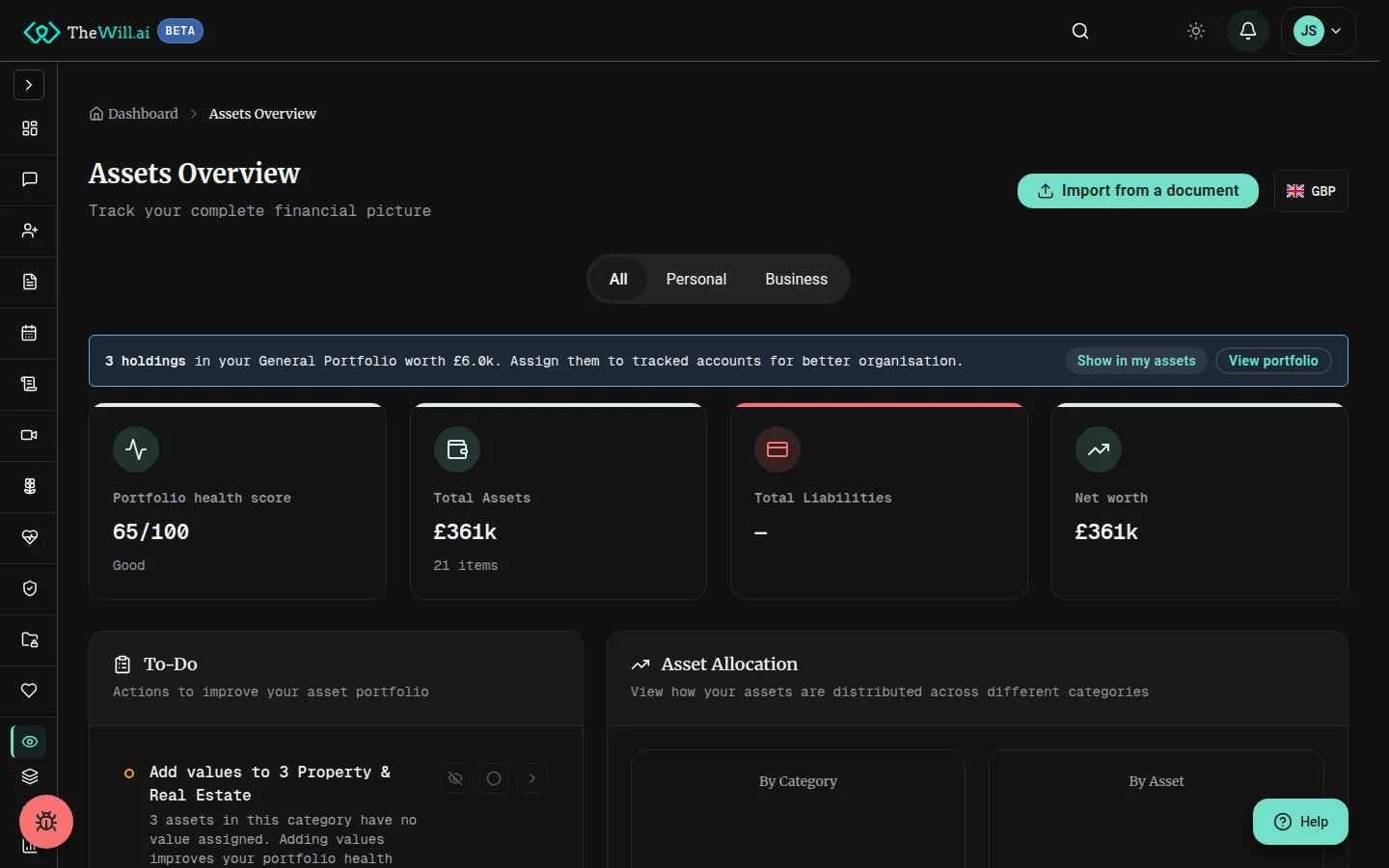
Your portfolio health score provides insights into the diversification and overall health of your asset portfolio.
- Score ranges from 0-100 based on multiple factors
- Considers asset diversification across categories
- Evaluates how many of your assets have a value recorded
- Weighs your geographic and currency spread, and your liabilities against your assets
- Provides actionable improvement suggestions
Family Portfolio Members
Track the investments of family members alongside your own, assign transactions to each person and view your combined holdings in one place.
Asset Classes
Choose which personal and business asset categories you want to track. Your selections drive the asset navigation menu and the asset overview. Sharing and privacy controls live in the Action Centre.
- Toggle personal asset categories (property, financial, possessions, equity comp, insurance)
- Toggle business asset categories (ownership, financial, digital, intellectual property, liabilities)
- See live counts and values per selected category
- Manage sharing and access from the Action Centre
Portfolio API
Best Practices for Asset Management
- Update asset values annually or when significant changes occur
- Keep ownership documents current and accessible
- Document any debts or liens against assets
- Include all significant assets, even if values are uncertain
- Review beneficiary designations on financial accounts
- Consider tax implications of asset transfers
Important Note
Maintaining accurate asset records helps ensure your will can be executed smoothly and reduces potential conflicts among beneficiaries.
Still have questions?
Join the discussion in our community. Ask verified professionals and other members for guidance.
Can’t find what you’re looking for?
Our support team is here to help. Contact us and we’ll get back to you as soon as possible.
Contact Support