

Funeral Wishes
Recording your funeral and memorial preferences so your loved ones know what you would have wanted.
Last reviewed
Understanding Funeral Wishes
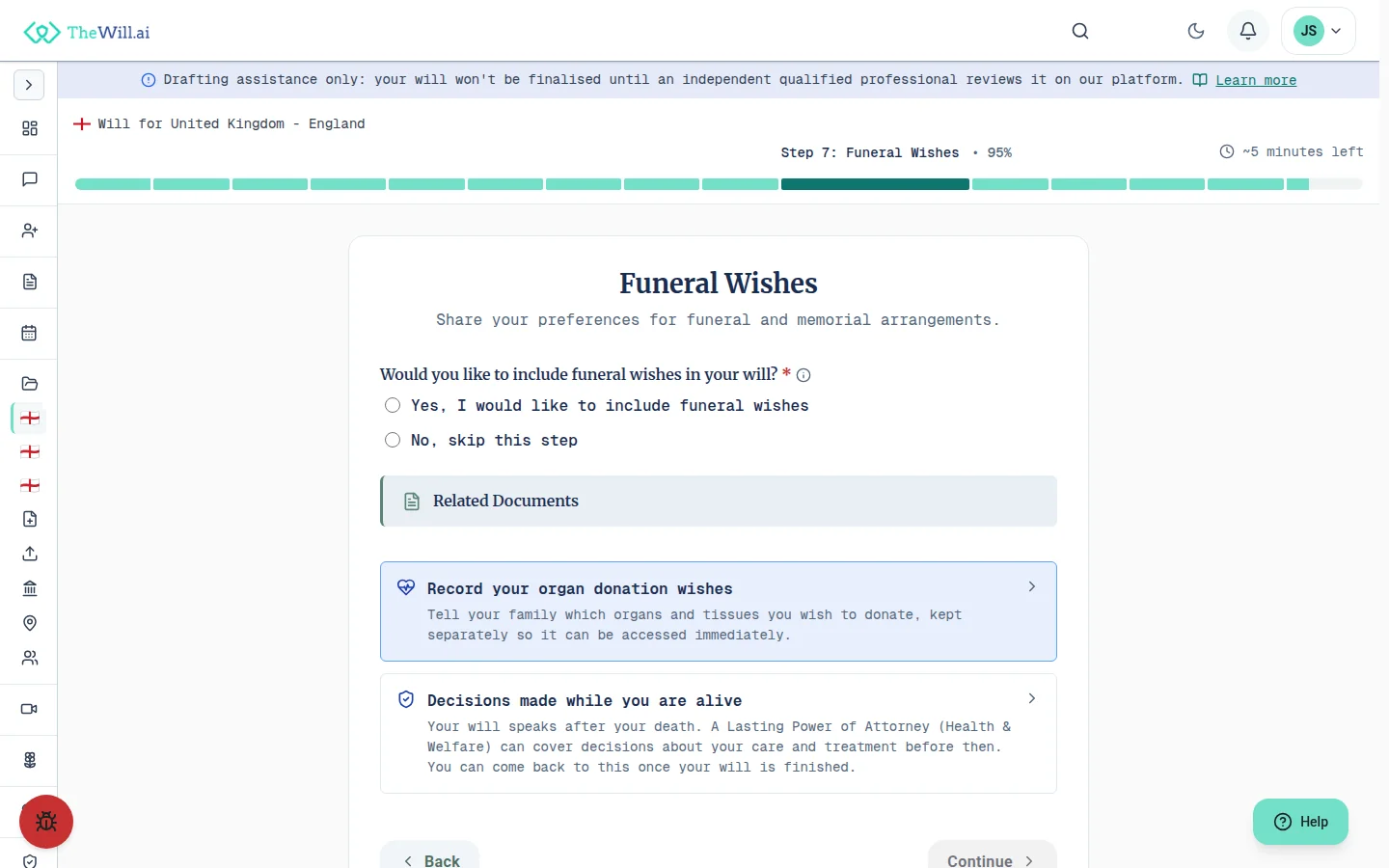
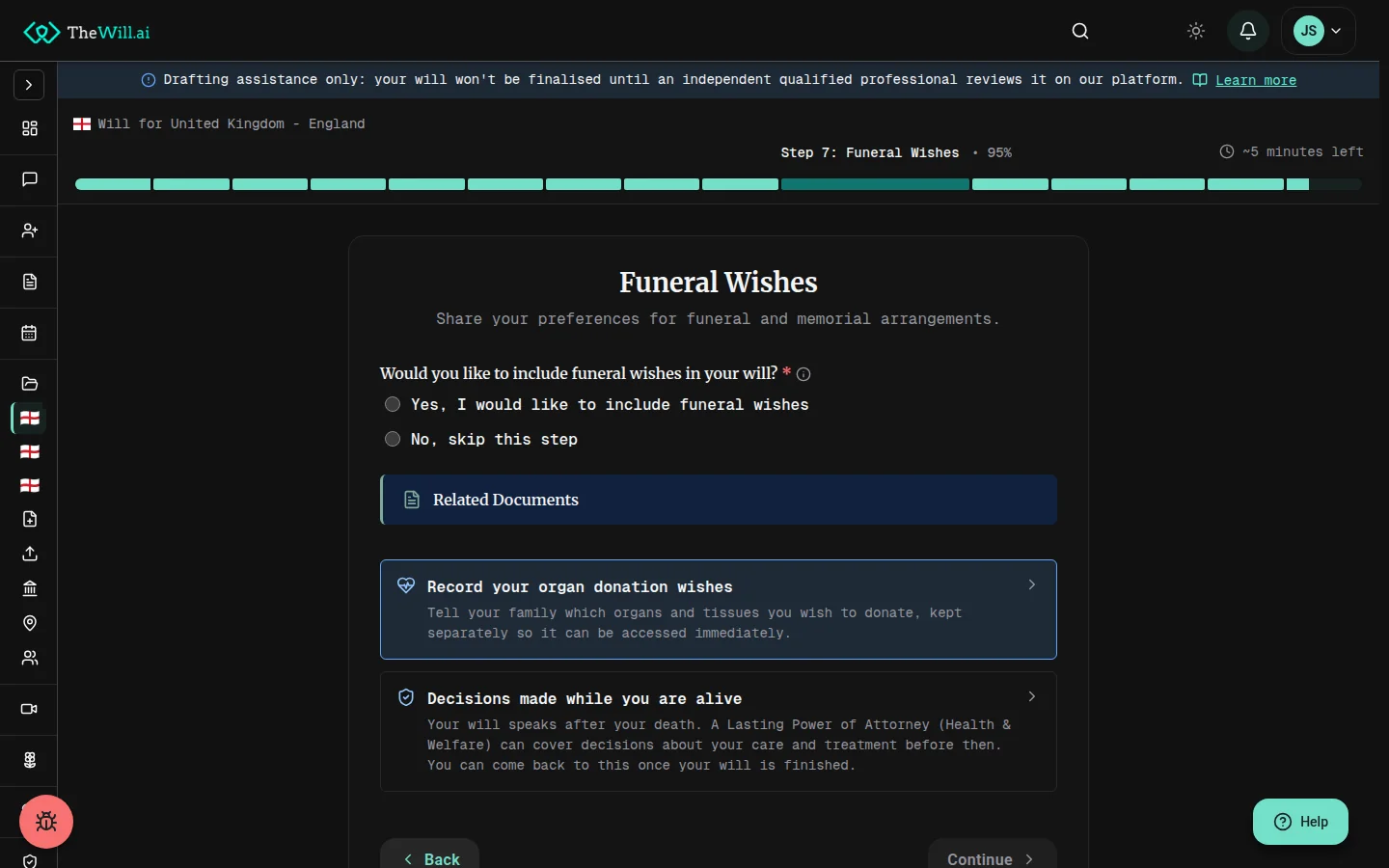
What This Step Is For
This step lets you record your preferences for your funeral and memorial. Setting them out clearly relieves your loved ones of difficult decisions during a painful time, and helps ensure that what happens reflects what mattered to you.
The step opens by asking whether you would like to include funeral wishes at all. If you answer no, the step is skipped. If you answer yes, the only other question you must answer is the type of funeral you prefer. Everything after that is optional, so record as much or as little as you wish.
Are Funeral Wishes Legally Binding?
In many jurisdictions, funeral wishes recorded in a will are treated as guidance rather than legally binding instructions, and the will is often not read until after the funeral has taken place. For this reason, it is wise to also share your wishes directly with the people who are likely to arrange your funeral, so they are aware of them in good time. Rules vary by jurisdiction. Consult a qualified professional if you want to understand how your wishes will be treated where you live.
Basic Preferences
Type of Funeral
You choose from burial, cremation, natural or green burial, burial at sea, donation to medical science, or another option you describe yourself. If you choose cremation, you can also note where you would like your ashes to be kept or scattered.
Body Preparation
You can record any preferences about how your body is prepared and washed, which matters a great deal in some faiths and traditions.
Service Style and Attendance
You can record the style of service you would like, choosing from simple and dignified, traditional, a celebration of life, religious, non-religious, private, or another style you describe. You can also record who you would like to be there, from family only through to open to all or by invitation only, and note any preference about timing.
There Are No Wrong Answers
These are personal choices, and there is no expected answer. Some people set out detailed wishes; others record only one or two preferences and leave the rest to those they trust.
Location and Service Details
Where the Service Takes Place
You can name a preferred location for the service, add its address, and suggest an alternative in case your first choice is unavailable. You can also name someone you would like to lead the service.
Personal Touches
You can record preferences that make the service personal to you, including:
- Music and any specific pieces you would like played
- Readings, poems or passages that are meaningful to you
- Whether you would like flowers, or donations to a charity instead
- Any environmental considerations that matter to you
- Photographs or personal items you would like on display
Announcements and Memorial
Announcements and Notices
You can note how you would like your passing to be announced, for example a notice in a particular publication, online announcements, or a memorial website where people can leave messages.
Reception and Lasting Memorial
You can record any wishes for a reception or gathering after the service, and for a lasting memorial such as a headstone, plaque, or commemorative donation.
Messages to Those You Leave Behind
You can leave personal messages or wishes for particular people, and instructions about thanking those who supported you. Please avoid recording passwords, PINs or account codes here.
What Goes Into Your Will Document
Everything you record here is saved to your profile, but only the disposition-essential preferences are written into the funeral clause of your will document itself. Those are:
- The type of funeral you prefer, including your own description if you chose Other
- The style of service, including your own description if you chose Other
- Who you would like to attend
- Where you would like your ashes kept or scattered
- Your body preparation preferences
- Your preferred service location
The remaining details, such as music, readings, flowers, announcements, prepaid plans and personal messages, stay on your profile rather than appearing in the will. That is deliberate: a will becomes a public document once it is proved, and these are practical arrangements your executors need rather than legal directions.
Prepaid Arrangements
Recording an Existing Plan
If you have already arranged or paid for a funeral plan, you can record the provider, a reference number, and any other details here. This helps your executors and family find and use the plan rather than arranging, and paying for, a funeral that is already covered.
Preferred Funeral Director
You can also name a funeral director you would like your family to contact, if you have one in mind.
Frequently Asked Questions
Do I have to complete this step?
You do have to answer the opening question, which asks whether you would like to include funeral wishes. Answering no skips the rest of the step. If you answer yes, you must also choose a funeral type, and everything beyond that is optional, so you can record only the preferences that matter to you and leave the rest to those you trust.
Can I change my wishes later?
Yes. You can return to this step and update your funeral wishes at any time while your will is being prepared, and you can revise your will if your preferences change in future.
Will my family see these wishes in time?
Because a will is often not read until after the funeral, your wishes may not be seen straight away. The most reliable approach is to record them here and also tell a trusted family member or your executors, so the people arranging your funeral know what you wanted.
Who carries out my funeral wishes?
Usually the people closest to you, often working with your executors, arrange your funeral. Recording clear wishes gives them confidence that they are honouring your choices.
Can’t find what you’re looking for?
Our support team is here to help. Contact us and we’ll get back to you as soon as possible.
Contact Support