Metaverse Post
🇧🇷
The 2026 Crackdown: How Regulators Extended AML Reporting And Transaction Controls To Individual Crypto Users
Cryptocurrencies
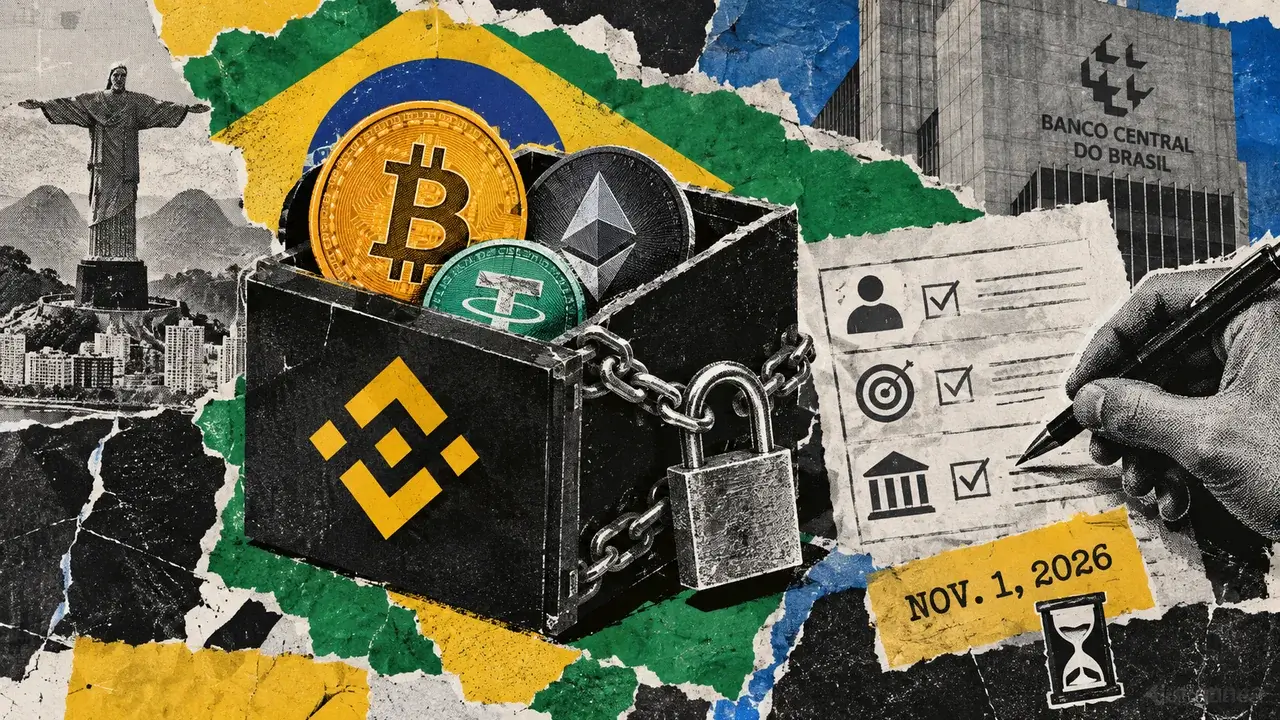
Brazil’s central bank has drawn a new line in the sand between its citizens and their private keys. On September 23, the Banco Central do Brasil issued Resolution BCB No. 588, amending the country’s anti-money-laundering framework to capture virtual asset transfers that were previously beyond the regulator’s sight. From October 1, 2026, any transfer of $10,000 or more to or from a self-custody wallet must be reported by the institutions processing it. The measure is notable for both what it does and what it does not do. It does not ban self-custody transfers, does not impose transaction limits, and does not automatically aggregate multiple sub-$10,000 transactions to close a loophole. Yet its significance lies precisely in its modesty: for the first time, Brazilian oversight formally extends beyond exchanges into the space regulators long described as crypto’s blind spot — the wallet that answers to no one but its owner. In one move, the act of moving one’s own money, on one’s own authority, has become a reportable event.


 Brazil

.webp)


















.webp)