

Will Registry
Recording that your will exists and where it is kept, so the people who need it can find it.
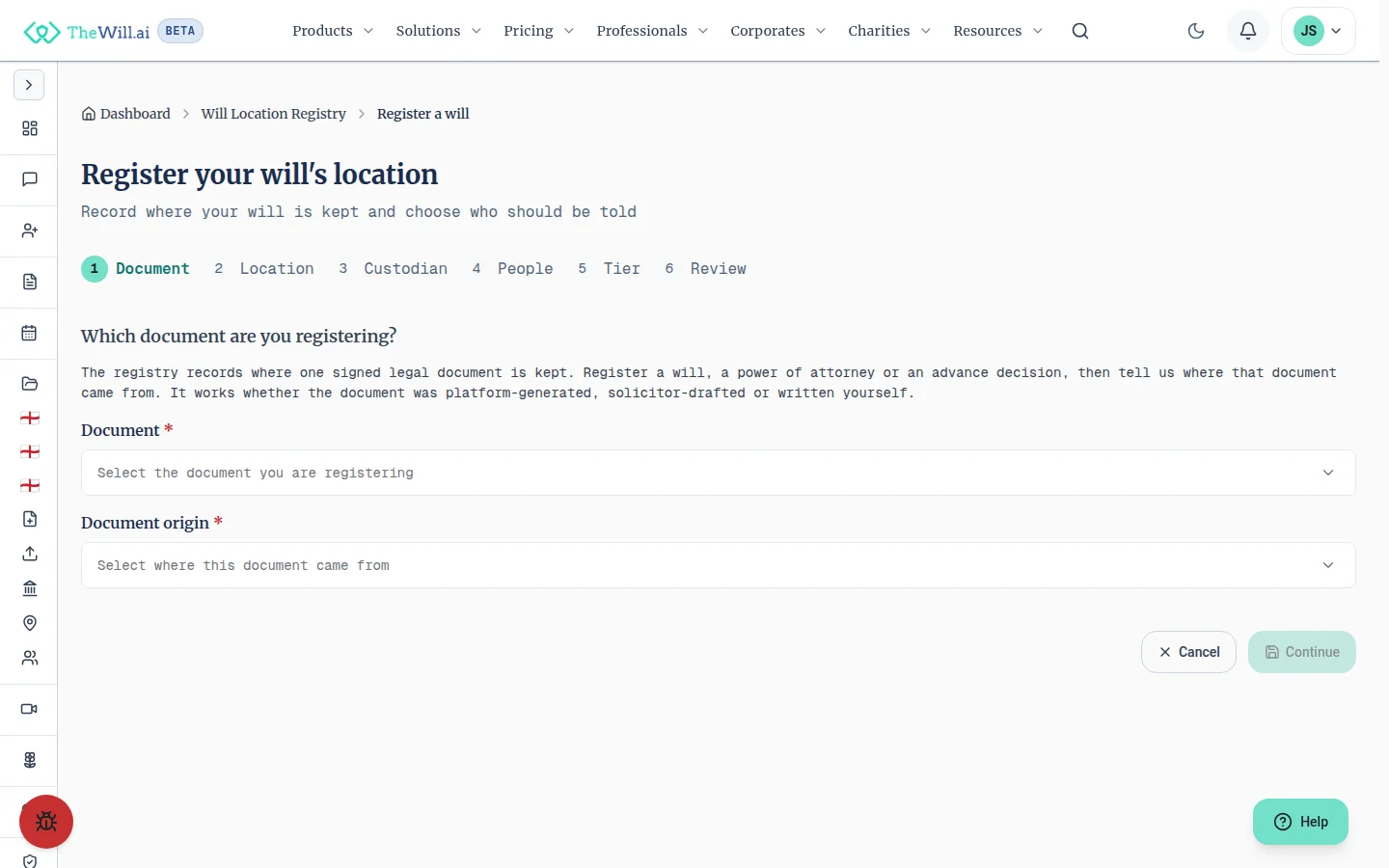

What Registering a Will Means
A Findability Record, Not a Copy of Your Will
Registering a will records the fact that a will exists and where the signed original is kept. A registry entry is a signpost. It typically holds your name, the date of the will, and the location or custodian of the original, so that someone searching after your death can be pointed to it.
The Problem It Solves
The most common practical failure with a will is not that it was drafted badly. It is that nobody could find it. A will kept in a drawer, with a solicitor the family never knew about, or with a firm that has since merged, may never surface. Registration makes the will discoverable by a search rather than by luck.
What a Registry Records
Typically Recorded
- Your full name, and any former names you made the will under
- Your date of birth
- The date the will was signed
- Where the signed original is held, or who holds it
Usually Not Recorded
- The contents of your will, or who inherits what
- The names of your beneficiaries
- The value of your estate
Your Wishes Stay Private
Because a registry entry is an index record rather than a copy, registering a will does not disclose who you have provided for. That detail stays in the will itself.
How a Registered Will Is Found
Searches Happen After Death
A registry is normally searched by executors, family members or the professional handling the estate, once a death has occurred and been evidenced. A search returns the pointer to the will, not the will itself, so whoever holds the original still has to release it.
Tell People It Exists Anyway
A registry entry only helps if someone thinks to search. Telling your executors that you have made a will, and that it is registered, remains the single most reliable step you can take.
Keeping the Entry Current
Register the Will You Actually Want Used
If you make a new will, the registry entry for the earlier one becomes misleading. Update or replace the entry whenever you sign a new will, so a search points at your current wishes rather than a superseded document.
Update It When the Original Moves
The entry records where the signed original is held. If you move it, change the person or firm holding it, or change your name, update the entry so the signpost still leads somewhere.
Frequently Asked Questions
Do I have to register my will?
No. Registration is optional in most places, and an unregistered will is not weaker for being unregistered. It is a findability measure, not a formality requirement.
Does registration replace storing the original safely?
No. The signed original still has to survive intact and be produced when needed. Registration tells people where to look for it; safe storage is what makes sure it is still there.
Can anyone look me up while I am alive?
Registries generally restrict searching to after death, and require evidence of it, precisely so that the existence of your will is not a matter of public curiosity during your lifetime.
What if I registered an old will and made a newer one?
Your most recent valid will governs your estate regardless of what is registered. The risk is practical rather than legal: a stale entry can send executors to the wrong document first, so keep the entry up to date.
Can’t find what you’re looking for?
Our support team is here to help. Contact us and we’ll get back to you as soon as possible.
Contact Support