

What Assets to Include in Your Will
Understanding what assets belong in your will and how jurisdiction affects what can be included.
Last reviewed
General Guidance
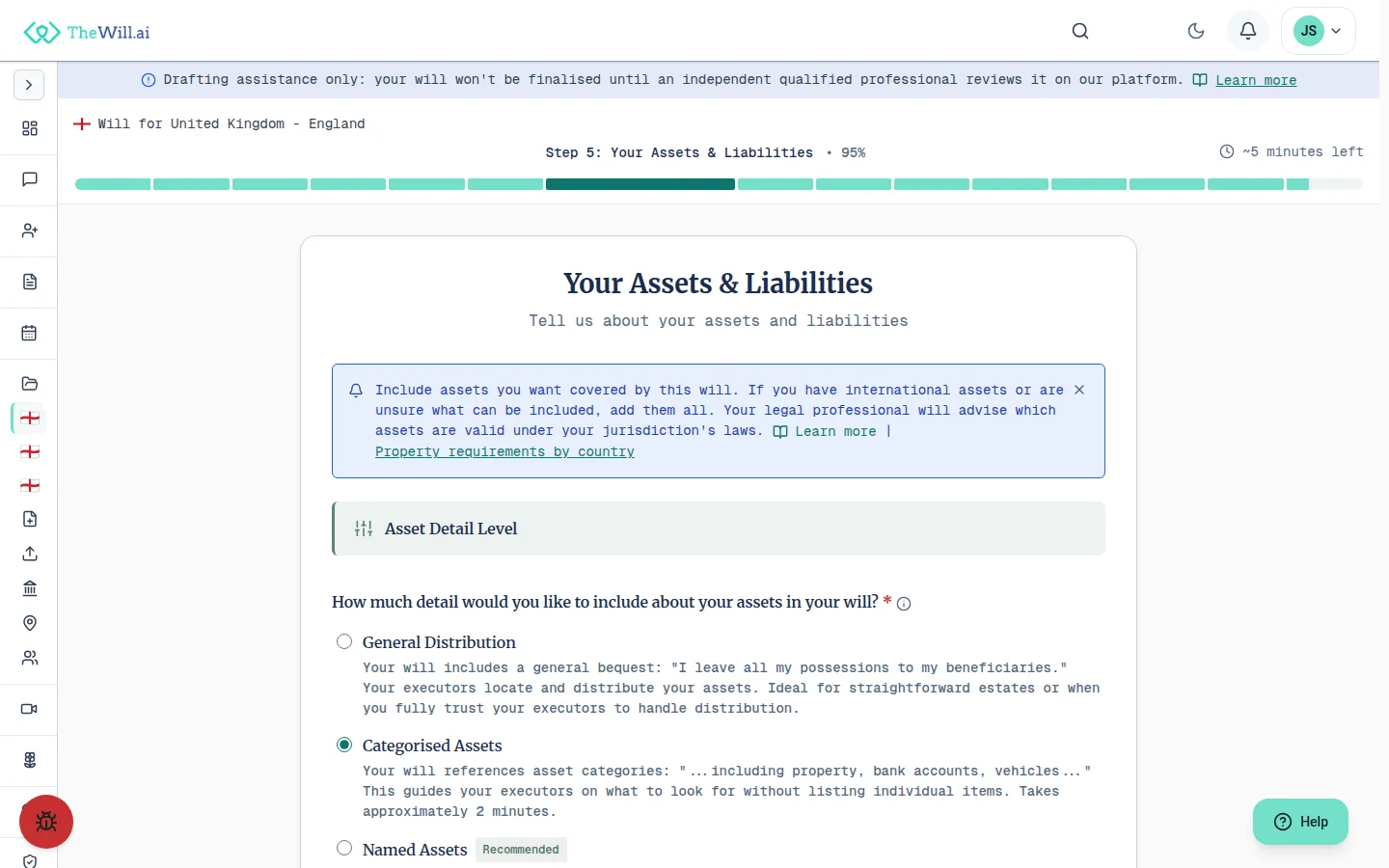
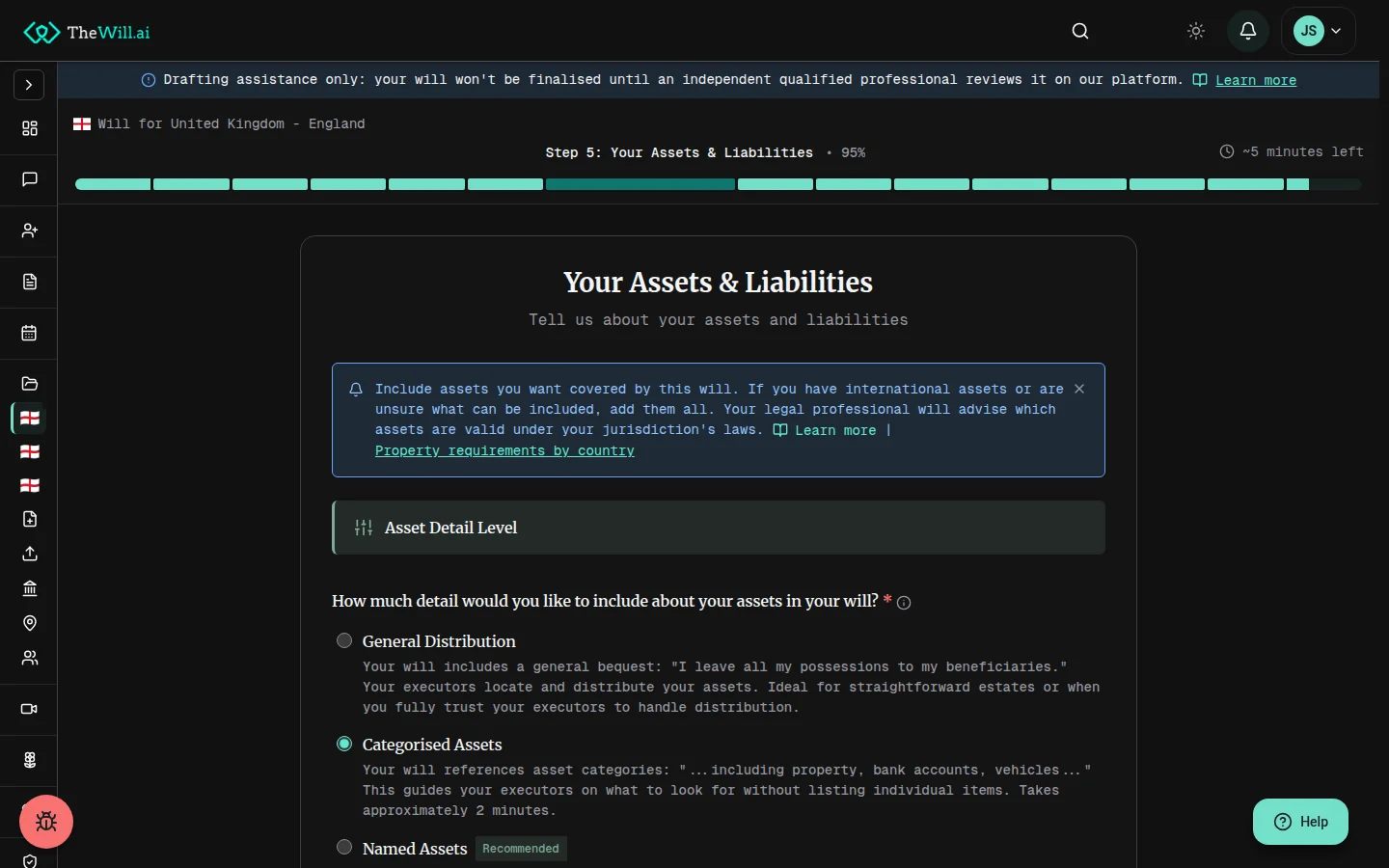
When creating your will, you should include assets you want to pass on to your beneficiaries. If you're unsure whether a particular asset belongs in your will, it's better to include it - your legal professional will help you determine what's appropriate under your jurisdiction's laws.
Personal Categories in the Assets & Liabilities Step
- Property & Real Estate - Main residence, investment properties, land
- Financial Assets - Bank accounts, savings, investments, and trading accounts
- Equity Compensation - Share options, restricted stock, and other equity-based pay
- Retirement Accounts - Pensions, retirement and employer savings schemes
- Insurance Policies - Life insurance, disability, long-term care
- Crypto Assets - Cryptocurrency holdings, exchange accounts, DeFi wallets, and NFTs
- Digital Services - Email, social media, domains, subscriptions, cloud storage, and other online accounts
- Personal Possessions - Vehicles, jewellery, art, electronics, clothes, collectibles, including the contents of a rented home
- Storage Locations - Self-storage units, safe deposit boxes and specialist storage, including how an executor gets in
- Precious Metals - Gold, silver, platinum holdings
- Expected Inheritance - Potential inheritances you may receive
- Other Assets - Anything not covered by the categories above
- Liabilities - Mortgages, loans, credit cards
Business Categories
- Company Shares & Partnership Interests - Your ownership stakes in companies and partnerships
- Business Financial Accounts - Business bank accounts and finances
- Business Digital Assets - GitHub, hosting, domains, licences
- Intellectual Property - Patents, trademarks, copyrights
- Business Liabilities - Business loans and obligations
Liabilities count too
The step is called Assets & Liabilities for a reason. Recording what you owe, alongside what you own, gives your executors an accurate picture of the estate they will be administering.
Our approach
We encourage you to list all your assets, even if you're unsure whether they should be in this particular will. Your legal professional will review everything and advise on what to include or handle separately.
International and Foreign Assets
If you own assets in multiple countries, the treatment of those assets in your will depends on the laws of each jurisdiction. Different countries have different rules about what can be included in a will and how foreign assets are handled.
Key Considerations for International Assets
- Location of the asset matters - The country where the asset is located may have specific inheritance laws that apply
- Some jurisdictions have forced heirship rules - Certain countries require that specific portions of your estate go to particular family members
- Multiple wills may be needed - In some cases, you may need separate wills for assets in different countries
- Tax implications vary - International assets may be subject to different inheritance or estate taxes
Legal advice recommended
If you have significant assets in multiple countries, we strongly recommend consulting with a legal professional who specialises in cross-border estate planning. They can advise on the best approach for your specific situation.
Jurisdiction-Specific Rules
Each jurisdiction (country or state) has its own rules about what makes a will valid and how assets are distributed. The jurisdiction you select for your will determines which laws apply.
What Determines Your Jurisdiction
- Domicile - Your permanent home, where you intend to live indefinitely
- Location of assets - Where your property and assets are situated
- Residence - Where you currently live (which may differ from domicile)
Common Jurisdiction Considerations
- Property requirements - Rules about witnesses, signatures, and formalities vary by country
- Community property vs common law - Different systems for how married couples own assets
- Inheritance rights - Some jurisdictions give automatic rights to spouses and children
More information
For detailed information about will requirements in specific countries, see our Property Requirements by Country guide.
When to Seek Legal Professional Advice
While our platform makes will creation straightforward, certain situations benefit from professional legal review. You can choose to engage an independent qualified will writer or solicitor from our marketplace to review your will before you sign.
Situations That May Need Expert Guidance
- Assets in multiple countries - Cross-border estate planning can be complex
- Business ownership - Succession planning for businesses requires careful consideration
- Blended families - Ensuring fair treatment of children from different relationships
- Complex trusts - Setting up trusts for minors, special needs, or tax planning
- Significant estate value - Tax planning for larger estates
- Unusual assets - Intellectual property, digital businesses, or unique collectibles
About professional review
Every will on Orchard72 is reviewed by an independent qualified will writer or solicitor of your choice from our marketplace before it can be finalised. The reviewer checks that the will is valid and comprehensive for your jurisdiction, and may flag concerns about specific assets, particularly complex trusts, business interests, or assets that sit in another country.
Special Asset Considerations
Some types of assets have special rules or may pass outside of your will. Understanding these can help you plan more effectively.
Assets That May Pass Outside Your Will
- Joint tenancy property - Typically passes automatically to the surviving owner
- Life insurance - Usually paid directly to named beneficiaries
- Pension benefits - Often have separate beneficiary designations
- Trust assets - Distributed according to trust terms, not your will
Assets Worth Including Anyway
Even if an asset might pass outside your will, it's often worth including it for clarity. This creates a comprehensive record of your estate and your intentions. Your legal professional can advise whether specific assets should be removed or handled differently.
Remember
When in doubt, include it. It's easier for your legal professional to advise on removing an asset than to identify something that should have been included.
Still have questions?
Join the discussion in our community. Ask verified professionals and other members for guidance.