

Organ Donation
Recording your organ and tissue donation preferences so the people closest to you know what you would have wanted.
Last reviewed
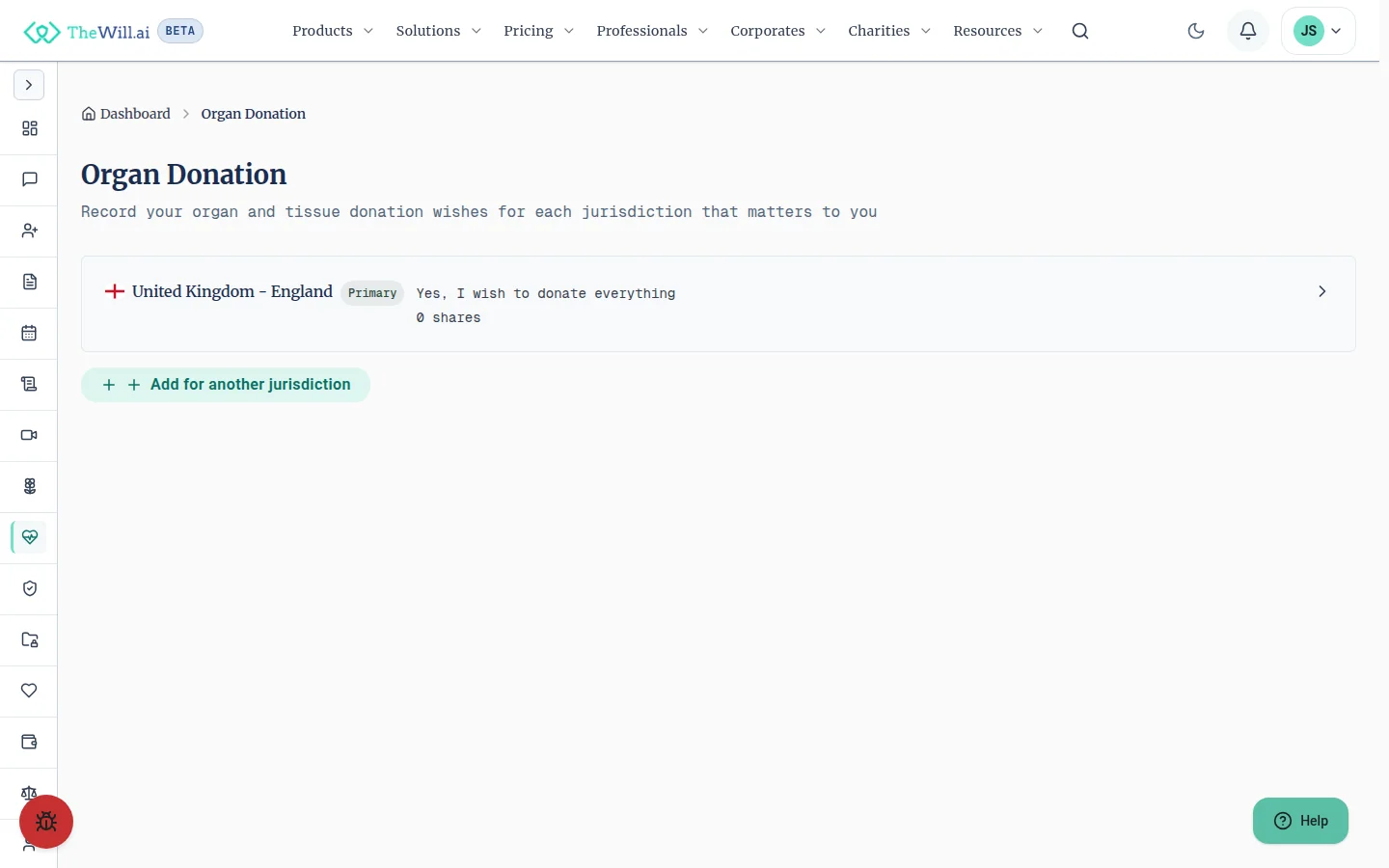
Understanding Organ Donation Preferences
What This Is For
This lets you record, in your own words, whether you would like to donate your organs and tissues and on what terms. Setting out your wishes clearly relieves your loved ones of a difficult decision at a painful time, and helps ensure that what happens reflects what mattered to you. Every question is optional, so record as much or as little as you wish.
Recording a Decision for Each Jurisdiction
You can keep a separate record for each country or region that is relevant to you, because the way donation is organised and the official register involved can differ from one place to another. Each record holds the donation decision, any specific organs or tissues, and the details you choose to add.
Recording Your Decision
Your Donation Decision
You start by choosing the decision that fits you, for example that you wish to donate everything, only specific organs or tissues, donate your body to medical science, that you do not wish to donate, or that you have not yet decided. The questions that follow adapt to the decision you make.
Specific Organs, Tissues and Exclusions
If you would like to donate only certain organs or tissues, you can choose them from the list. If you are happy to donate everything but want to set aside one or two things, you can record those exclusions instead. You can also note the purposes you are comfortable with, such as transplantation, medical research or medical education.
Family Contact and Notes
You can record whether your family is already aware of your wishes, name a family contact, and add any further instructions you would like the people arranging things to know.
If You Are Already on an Official Register
Each record can also note that you have registered on an official organ donor register, along with the registration or donor number if you have one. Keeping that here means whoever reads your wishes can point medical staff at the official record rather than starting from scratch.
There Are No Wrong Answers
These are personal choices, and there is no expected answer. Some people set out detailed wishes; others record only a single decision and leave the rest to those they trust.
Download as a PDF
Keeping a Printed Copy
From a record's page you can choose “Download as PDF”. This opens your browser's print dialogue on a clean, print-only layout of that record, so you can save it as a PDF or send it straight to a printer. This is useful for:
- Giving a physical copy to your GP or doctor
- Keeping a printed copy with your important documents
- Sharing with someone who does not use email
The document is created when you ask for it and reflects your latest preferences. A printed copy is a snapshot in time, so if you change your wishes later, share an up-to-date link or print a fresh copy.
A Statement of Wishes
The downloaded document is a statement of your wishes and is not legally binding. It is best used alongside registering on your national organ donor register, not in place of it.
Keeping It Up to Date
Reviewing and Updating
You can return to a record at any time to update your decision, and you can confirm that a record is still current so that the people you have shared it with know it reflects your present wishes. If your circumstances change, updating here keeps any shared links and future downloads in step with what you want.
Frequently Asked Questions
Do I have to record organ donation preferences?
No. This is entirely optional. You can record a decision for one jurisdiction, several, or none at all, and you can leave any individual question blank.
Does recording my wishes here register me as a donor?
No. Recording your wishes here creates a clear record you can share, but it is separate from any official organ donor register. Where one is available, registering there as well means your decision is recorded for medical professionals.
Can I change my wishes later?
Yes. You can update a record at any time. Shared links show your latest wishes, and you can download a fresh copy whenever you make a change.
Will my family see my wishes in time?
Because donation may need to happen quickly, the most reliable approach is to share a secure link with your next of kin or GP, and to tell them about your wishes directly, rather than relying on your will being read.
Can’t find what you’re looking for?
Our support team is here to help. Contact us and we’ll get back to you as soon as possible.
Contact Support